Privacy as a Product: What DuckDuckGo's Stunt Reveals About AI Wearables
When a privacy company feels compelled to guarantee that its glasses will not record nude videos of you and transmit them to strangers, something has gone seriously wrong with the industry landscape. That is exactly the territory DuckDuckGo stepped into with its tongue-in-cheek "Normal Sunglasses" campaign — a direct jab at Meta's AI-enabled smart glasses and the researchers who demonstrated how the hardware could be weaponised for covert facial recognition and invasive surveillance.
The joke lands because the underlying anxiety is real.
What Is Actually Being Debated Here
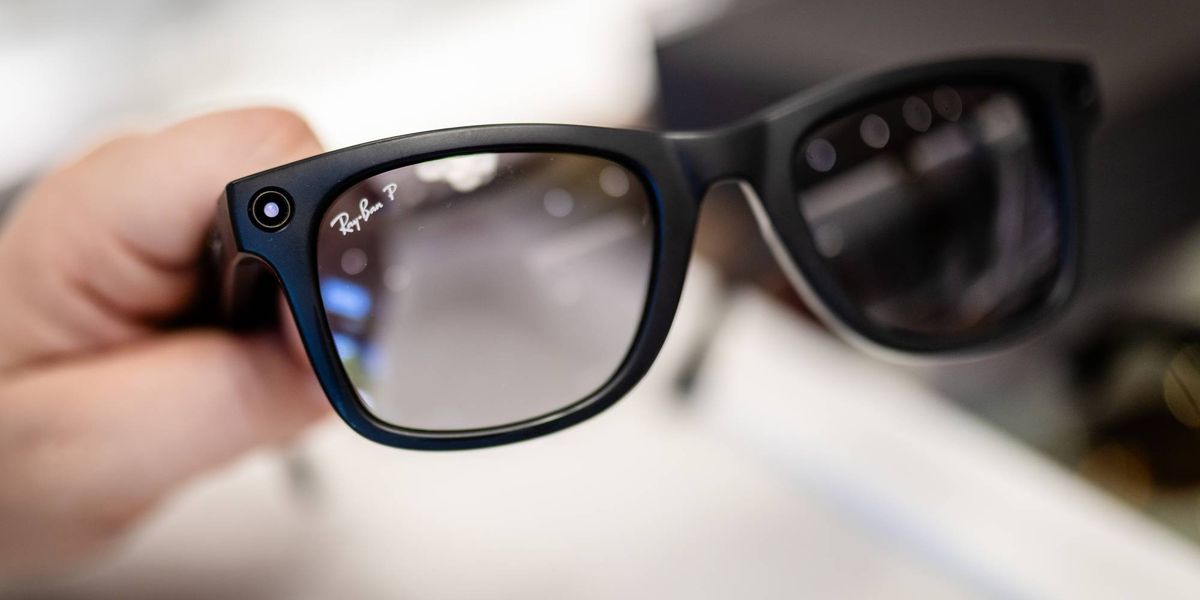
Meta's Ray-Ban smart glasses are genuine consumer hardware: they stream video, integrate AI assistants, and sit comfortably on millions of faces in public spaces. Harvard students demonstrated earlier this year that combining the glasses' live video feed with facial recognition APIs and public data sources could surface a stranger's name, address, and phone number within seconds — purely from a glance across a café.
DuckDuckGo's campaign does not introduce new technology. It sells ordinary, non-recording sunglasses and frames the absence of surveillance features as the product's core value proposition. The brilliance — and the provocation — is that "does not spy on you" now reads as a differentiating feature rather than a baseline expectation.
That reframing deserves serious attention from anyone building software products.
The Trust Deficit in AI Consumer Hardware
AI-powered wearables occupy an uncomfortable position in the product stack. They sit at the intersection of three domains that are each individually complex:
- Computer vision, which is increasingly accurate and increasingly cheap to deploy at the edge
- Consumer hardware, where physical form factor creates an illusion of normalcy and social acceptability
- Always-on connectivity, which enables continuous data egress that users rarely think about in the moment
When you combine these three, you get a device capable of collecting sensitive biometric and contextual data in ways that a smartphone — which people are now trained to regard with suspicion — does not. A phone in a pocket feels inert. Glasses on a face feel passive. That perception gap is exactly what makes the threat surface so significant.
The deeper problem is consent architecture. Most AI wearable consent flows happen once, at setup, in dense terms-of-service language. What actually gets recorded, processed, and retained during a Tuesday afternoon walk through Accra or London is opaque to the user and often to regulators.
Privacy as a First-Class Engineering Requirement
DuckDuckGo's stunt is funny. It is also a masterclass in positioning. The company has spent years building a brand around a single engineering commitment — collect as little data as possible, and be loud about it. That commitment is now commercially valuable enough to anchor a product marketing campaign that generated international coverage.
For software teams, this is the lesson worth internalising: privacy is not a compliance checkbox; it is a design primitive.
Concretely, that means asking the following questions at the architecture stage, not the launch stage:
- What is the minimum data required to deliver this feature? Collect only that.
- Where does data rest, and for how long? Define retention policies in code, not policy documents.
- Can the user meaningfully audit or delete what has been collected? Build that interface before the dashboard.
- If this data were leaked or subpoenaed, what would be exposed? Design as if that outcome is probable.
A short example of what intentional data minimisation looks like at the API layer:
# Instead of logging the full request object (which may include PII):
logger.info("Search query received", extra={
    "query_length": len(query),
    "result_count": len(results),
    "session_id": anonymise(session_id),  # one-way hash, not raw ID
    # Notably absent: raw query text, user IP, device fingerprint
})
This is not hypothetical caution. It is the kind of decision that determines whether a data incident becomes a minor operational event or a front-page story.
What This Means for SaaS Founders and AI Builders
The market for privacy-respecting software is not niche anymore. Regulatory pressure from GDPR, Kenya's Data Protection Act, Nigeria's NDPA, and a growing list of African and global frameworks is creating legal floors. But more interestingly, consumer awareness is creating commercial ceilings for products that treat data extraction as a default business model.
DuckDuckGo did not build a better search engine in the conventional sense. It built a search engine with a different data philosophy and waited for the world to catch up. The world is catching up.
For teams building AI features — whether in mobile apps, SaaS platforms, or ML pipelines — the strategic question is no longer just "what can we collect?" but "what do we refuse to collect, and how do we make that refusal visible and credible to users?"
That last word matters. Credibility requires more than a privacy policy. It requires architectural choices that make surveillance technically difficult even for your own engineering team. It requires honest data flow documentation. And occasionally, it requires the courage to ship a product that does less than a competitor's product, because the thing it does not do is the point.
DuckDuckGo put that argument on a pair of sunglasses. It was a joke. It was also a product roadmap.
Why this matters for your project: Whether you are building a mobile app that requests location access or an ML pipeline that processes user-generated content, privacy architecture decisions made early compound over time — in technical debt, in regulatory exposure, and in user trust. The teams that treat data minimisation as a core engineering discipline today are the ones that will not be scrambling to explain themselves when the next hardware demonstration goes viral.
Source: Common Dreams — https://www.commondreams.org/news/duckduckgo-vs-pervert-glasses